Payday Loans Online: A Complete Guide to How They Work
Payday loans online have become one of the most searched financial products in the US — and one of the most misunderstood. The product itself is simple. The regulations around it are not. Before applying, it’s worth understanding what you’re actually getting into: the mechanics, the costs, the legal landscape, and how to tell a legitimate lender from a problematic one.
What a Payday Loan Actually Is
A payday loan is a short-term, small-dollar loan tied to your next paycheck. You borrow a fixed amount, agree to repay it on your next pay date, and pay a flat fee for the privilege. The loan isn’t tied to a purchase or a specific asset — it’s unsecured, based on your income.
Online payday lending works the same way structurally, but the entire process happens through a browser or an app. Application, approval, agreement, and direct deposit all happen without stepping into a building. That’s the main difference from storefront payday lending. The product terms, fee structures, and state law requirements are generally the same.
Loan amounts typically run from $100 to $1,500, though state law caps the maximum in most jurisdictions. Repayment comes out of your bank account on the agreed date, usually your next payday.

Payday Loans Online Same Day: How the Timing Works
Speed is the main selling point, and it’s real — with conditions. Online payday loans instant approval comes from automated underwriting. Systems review your application and return a decision in minutes. That part is straightforward.
Funding is where timing gets specific. Most online lenders move money via ACH transfer. The transfer goes out once you’ve been approved and signed your agreement. Whether it lands the same day depends on when that signing happens relative to the lender’s daily processing cut-off.
Most lenders set that cut-off somewhere between noon and 2 PM on business days. Complete everything before that window and you’re looking at payday loans online same day deposit. Miss it and funds arrive the next business morning. A handful of lenders use debit card push payments instead of ACH, which can clear faster, including in some cases outside standard banking hours.
The practical takeaway: apply early in the day on a weekday if same-day funding matters. Applications submitted Thursday evening won’t fund until Friday at the earliest, and weekend applications won’t move until Monday via standard ACH.
Payday Loans Online No Credit Check: What Lenders Actually Review
The no credit check claim is mostly accurate but needs context. Most online payday lenders don’t pull from Equifax, Experian, or TransUnion. That’s the “credit check” most people think of, and skipping it means no hard inquiry affecting your score.
What lenders do check instead varies. Many use alternative data providers like Clarity Services or Teletrack, which track short-term lending history rather than full credit reports. These checks show whether you’ve defaulted on prior payday loans or have multiple active short-term loans open at once. A rough FICO score won’t stop an application here, but a recent default on a payday loan through the same lending network might.
Some lenders skip third-party checks entirely and rely on bank account activity and income verification. Your deposit history over the past 60 to 90 days tells them more about your actual financial behavior than a credit score does.
For payday loans online bad credit applicants, the qualification criteria center on three things: active bank account, verifiable income meeting the lender’s minimum threshold, and identity confirmation. Past credit problems, including collections and charge-offs, generally don’t disqualify applicants in this category.
State Laws and Where Payday Lending Is Legal
This is the part of the picture that most comparison articles gloss over, and it matters. Payday lending is regulated at the state level in the US, and the rules vary dramatically.
Some states permit payday lending with fee caps and loan amount limits. California caps payday loan amounts at $300 and limits the fee to 15% of the loan amount. Texas allows higher amounts but requires certain disclosures through the Office of Consumer Credit Commissioner. Florida caps loans at $500 with a maximum fee of 10% plus a $5 verification fee and mandates a 24-hour cooling-off period between loans.
Other states ban the product outright. New York, New Jersey, Pennsylvania, Maryland, and several others prohibit payday lending within their borders. Online lenders operating in those states — or claiming to lend to residents of those states — are typically doing so outside the law. Tribal lenders complicate this further; some claim sovereign immunity to operate across state lines, though federal consumer protection law still applies.
The practical check: before applying to any online lender, confirm they’re licensed to lend in your state. A legitimate lender will list their state licenses in the footer or on a dedicated legal disclosures page. If you’re in a state where payday lending is restricted, look for alternative products — installment loans from licensed lenders are often available where payday products aren’t.
APR, Fees, and Total Cost: What You’re Actually Paying
Payday loan costs are quoted as flat fees per $100 borrowed, not as interest rates. $15 per $100 is the most common figure, though rates range from $10 to $30 per $100 depending on the state and lender.
The fee sounds manageable. The math changes when you annualize it. A $15 fee on a $100 two-week loan equals roughly 391% APR. A $20 fee over the same term reaches 521%. These aren’t mistakes or exaggerations — they’re the result of applying annual percentage rate math to a very short loan term.
This doesn’t mean payday loans are categorically a bad choice. It means the APR metric is less useful here than the total dollar cost. Borrow $500, pay a $75 fee, repay $575 in two weeks. That’s the actual transaction. Whether that cost is worth it depends on the alternative: an overdraft fee, a late utility payment penalty, or the cost of a missed work shift without a car.
Where the cost structure gets genuinely problematic is rollovers. Many states allow lenders to extend the loan term for an additional fee if you can’t repay on time. Roll a $300 loan over three times at $45 per extension and you’ve paid $135 in fees without touching the principal. The Consumer Financial Protection Bureau has documented this pattern extensively. Some states prohibit rollovers specifically for this reason.
Best Online Payday Loans: What to Actually Compare
“Best” in this context is borrower-specific, but there are objective factors worth comparing across any lenders you’re considering:
- Licensing. Does the lender hold a valid license in your state? This is non-negotiable. Unlicensed lenders operate outside consumer protection frameworks and can’t legally collect in many states.
- Full fee disclosure before signing. A legitimate lender shows you the total repayment amount, the fee, and the due date before you sign. If those numbers only appear after you’ve committed, that’s a structural problem.
- Rollover policy. Some lenders allow rollovers; some don’t. Knowing this before you borrow is important, not because you plan to use one, but because you need to know what happens if repayment timing becomes difficult.
- Repayment flexibility. Can you repay early without penalty? Can you adjust the payment date if needed? These details are buried in loan agreements but matter when life doesn’t line up with the repayment schedule.
- Privacy practices. Particularly relevant with matching platforms that share your application with multiple lenders. Read the data sharing disclosure before submitting personal information.
Legitimate Online Payday Loans: How to Tell the Difference
The payday lending space has a meaningful share of illegitimate operators. Borrowers under financial stress are a target for fraud, and some of the patterns are well-documented.
Signs of a legitimate lender:
A state license listed and verifiable through the relevant regulator. Physical address and contact information that resolves to a real location. Full APR and fee disclosure before you sign. No request for payment before disbursement. Clear terms in plain language.
Signs that something is off:
Guaranteed approval with no income or identity requirements whatsoever. Requests for wire transfers, gift cards, or cryptocurrency before funds are released. No license information anywhere on the site. A domain registered recently with no verifiable business history. Pressure to decide immediately without reviewing the agreement.
The most reliable check for any online lender is your state’s financial regulator. Most maintain public databases of licensed lenders searchable by company name. If a lender can’t be found there, that’s a definitive signal.
Payday Loans Online Direct Lender vs. Broker Platforms
The distinction comes up constantly in payday lending and is worth understanding clearly. A direct lender originates, underwrites, and funds the loan entirely. Your application goes to one company, one underwriting decision comes back, and that company holds your loan through repayment. Data stays with one party.
Broker platforms, also called lead generators or matching services, collect your application and sell it to a network of lenders. You may receive multiple offers, sometimes from lenders in states other than your own. The data you submit goes to multiple companies simultaneously.
Neither model is inherently better. Brokers can surface offers you might not find independently, and fast competition among lenders sometimes produces better terms. But the data sharing is real and broad. If you submit through a matching platform, expect calls and emails from multiple lenders, sometimes for weeks afterward.
For borrowers who want control over who sees their information, payday loans online direct lender platforms are the cleaner path. One application, one decision, one data recipient.
24 Hours and Weekend Access: Realistic Expectations
Payday lenders are available around the clock in the sense that you can submit applications at any time. Processing and funding are a different matter.
ACH transfers follow banking network schedules. They don’t process on weekends or federal holidays. An application submitted at 11 PM Saturday won’t result in funded money until Monday morning at the earliest, regardless of what an approval confirmation email says.
Some lenders have started using real-time payment networks, including FedNow and RTP, which operate outside standard banking hours. These are still a minority of the market. Debit card push payments are another workaround for weekend funding. If you specifically need money on a Saturday or Sunday, look for lenders that explicitly advertise weekend disbursement and confirm the funding mechanism directly.
For guaranteed same-day access any day of the week, storefront payday lenders remain the most reliable option. They hand over cash in person, no ACH required, no banking schedule to navigate.
Repayment: What Happens on the Due Date
Most online payday lenders collect repayment via automatic ACH debit from the bank account you provided. On the due date, they pull the full repayment amount. No action required from you — but you need sufficient funds in the account when that pull runs.
An insufficient funds scenario triggers an NSF (non-sufficient funds) fee from your bank, typically $25 to $35, and may also trigger a returned payment fee from the lender. Some lenders attempt the debit multiple times if the first attempt fails, which can compound bank fees quickly.
If you know repayment is going to be a problem before the due date, contact the lender before the payment runs. Some lenders will work out a modified payment arrangement. This is easier to negotiate before a failed payment than after. Documented contact before a missed payment is also better for your record in short-term lending databases if the situation escalates.
Some states require lenders to offer an extended payment plan at no additional cost after a certain number of consecutive loans. California and Washington have this requirement, for example. If you’re in a state with this protection, know it exists before you need it.

Payday Loans Online Bad Credit: A Realistic Assessment
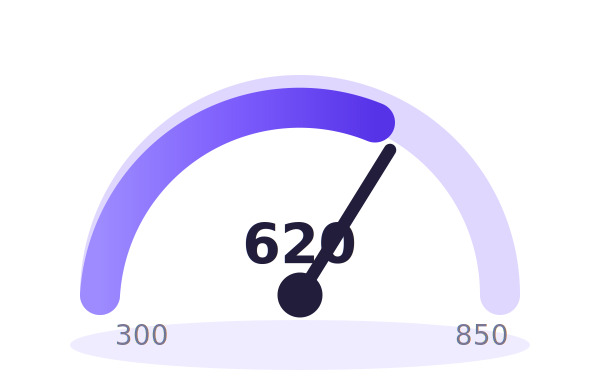
These products serve a real need. For borrowers outside the traditional banking system — no credit history, damaged credit, limited savings — payday lending is sometimes the only bridge between a financial emergency and a worse outcome.
The product works well in a specific scenario: a one-time, short-term gap with a concrete repayment plan. You know the money is coming in two weeks. You need it now. You take the loan, you repay it in full on schedule, you’re done.
It works poorly as a recurring mechanism for an ongoing shortfall. Borrowers who roll over loans repeatedly or take a new loan immediately after repaying the last one end up in a fee cycle that costs far more than any single loan did. The CFPB’s research on payday borrowing patterns found that the majority of loan revenue comes from borrowers who take out ten or more loans per year — a pattern that suggests the product is functioning as ongoing credit rather than short-term emergency access.
That’s the context for using it carefully. The product itself isn’t the problem. The pattern of use determines whether it helps or compounds the original financial difficulty.
FAQ
People come to this topic with very specific questions. Below are the ones that come up most consistently, answered directly.
Are online payday loans legal?
Legality depends entirely on your state. Some states permit payday lending with fee and amount caps. Others prohibit it outright. Always verify that the lender is licensed in your specific state before applying. Operating with an unlicensed lender in a state that bans payday lending means you may have no legal recourse if something goes wrong.
How fast is the approval process?
Online payday loans instant approval comes from automated underwriting that reviews your application in minutes. Approval itself is fast. Funding via ACH follows, typically same-day for applications completed before the lender’s processing cut-off on a business day.
What do I need to apply?
Standard requirements across most lenders include a government-issued photo ID, Social Security number, active bank account with routing and account numbers, proof of regular income, and a valid email address and phone number. Some lenders ask for recent bank statements or pay stubs for verification.
Can I get a payday loan if I’m on benefits?
Many lenders accept government benefits, Social Security, disability payments, and unemployment insurance as qualifying income. The monthly amount needs to meet the lender’s minimum threshold, which is typically around $800 to $1,000. Documentation in the form of an award letter or bank statements showing consistent deposits is usually sufficient.
What happens if I can’t repay on time?
Contact the lender before the due date. Some offer payment plans or extensions. Understand that extensions often come with additional fees. If you’re in a state that requires lenders to offer extended repayment plans, that option exists regardless of lender policy. A failed automatic payment triggers bank NSF fees on top of any lender penalties, so proactive communication matters.
How do I know if an online payday lender is legitimate?
Legitimate online payday loans come from licensed lenders that disclose all fees and terms before signing, don’t charge upfront fees, and have verifiable state licensing. Cross-check any lender’s name against your state financial regulator’s public license database. If the lender doesn’t appear there, don’t proceed.
Can I have multiple payday loans at once?
That depends on state law. Some states explicitly prohibit having more than one payday loan open at a time and maintain databases that lenders check before approving new applications. Others have no such restriction. Check your specific state’s rules. Having multiple concurrent short-term loans is also tracked by alternative credit databases, which can affect approval with other lenders in the same network.